
Daily worship, Sabbath rest, and simple spiritual habits restore your mind, body, and spirit—practical steps to rebuild from burnout in minutes a day.
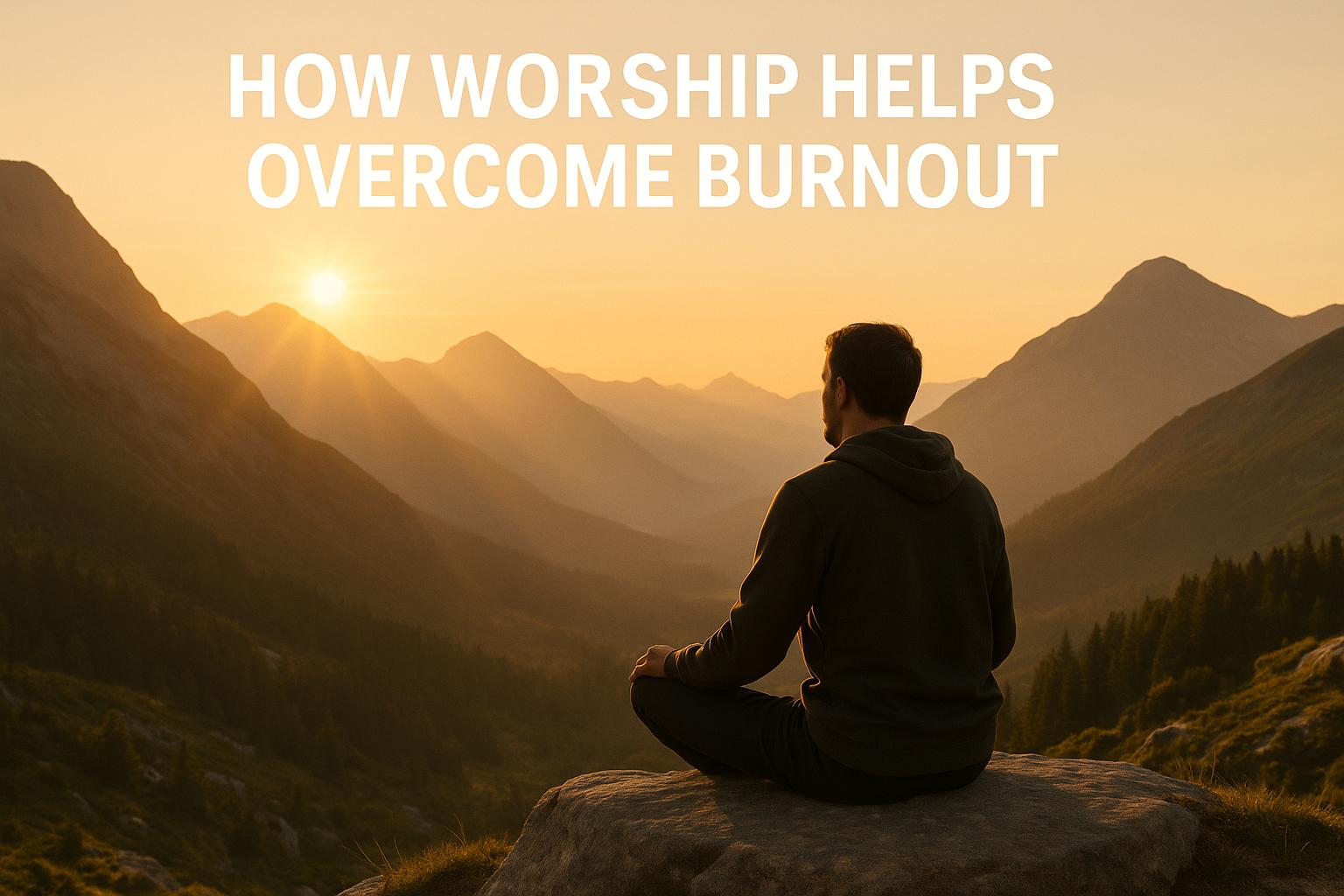
Burnout can leave you feeling exhausted, disconnected, and overwhelmed. Worship provides a way to reconnect with God, shift your focus, and find renewal. It’s not about perfection or adding tasks to your day - it’s about creating space to rest, reflect, and recharge spiritually.
Here’s how worship helps:
Practical steps include starting small, integrating worship into daily routines, and honoring the Sabbath as a time for rest and spiritual renewal. Even five minutes of focused worship can make a difference. Tools like reminders, playlists, or habit trackers can help you stay consistent without adding stress.
Rebuilding from burnout takes time, but worship and rest together create a path to spiritual health and peace.
Worship does more than shift your focus from personal limits to God's strength - it works on every part of you. Burnout doesn’t just affect your mind, body, or spirit in isolation; it takes a toll on all three. Your thoughts become tangled with anxiety, your body feels drained, and your spirit can feel distant and disconnected. Worship offers a way to restore balance and bring healing to all these areas at once.
When burnout sets in, it’s easy to lose sight of who you are. Your sense of identity can get wrapped up in how much you achieve or how well you meet expectations. Worship cuts through this noise, reminding you of a profound truth: you are, first and foremost, a beloved child of God. This isn’t just a comforting idea - it’s a transformative reality. It frees you from the endless cycle of trying to prove your worth through accomplishments or productivity. Your value doesn’t change, no matter how good or bad your circumstances might seem.
Worship also helps you refocus on what truly matters. It shifts your attention away from the constant demands of life and back to the core principles of loving God and loving others. This clarity allows you to separate what’s truly important from what’s just adding unnecessary stress.
Even more, worship reconnects you with your deeper purpose. Burnout can make your efforts feel meaningless, but in God’s presence, you’re reminded that your life has significance beyond your daily tasks. You’re part of something bigger - a redemptive story that gives meaning to everything you do. This renewed sense of purpose naturally leads to gratitude, which is another powerful gift of worship.
Gratitude might be one of the most effective ways to counter burnout, and worship creates space for it to flourish. When life feels overwhelming, your mind often latches onto what’s going wrong. Worship interrupts this cycle, redirecting your attention to the blessings and goodness in your life.
Praising God lifts your mood and strengthens your ability to face challenges. It doesn’t mean ignoring your struggles. Instead, it places those struggles within the bigger picture of God’s faithfulness. Over time, this practice helps you shift from despair to hope, building resilience in the process.
The beauty of gratitude in worship is that it doesn’t require you to feel thankful at the start. You don’t need to force yourself into a positive mindset. Simply choosing to thank God for small things - like your breath, a new day, or His steady presence - can gradually bring back the emotional energy you thought you’d lost.
Burnout thrives when you’re always on the go, leaving no time to pause and process. Worship invites you to stop, creating a sacred space where you can simply exist without pressure.
This pause isn’t laziness - it’s essential for your well-being. Just as your body needs sleep, your spirit needs moments of stillness in God’s presence. Whether you’re singing, praying, or sitting quietly, worship gives you permission to rest without guilt. It’s also a safe space for vulnerability, where you can bring your true feelings - exhaustion, frustration, confusion - before God.
In this stillness, honest reflection becomes possible. You can take stock of how you’re really feeling and invite God into those emotions. Quiet moments in worship often open the door for His guidance, whether through comforting reassurance, insight into unhealthy patterns, or a simple reminder that you’re not alone.
Even the physical act of worship - standing, kneeling, raising your hands - engages your body in the process of renewal. Burnout often leads you to ignore your body’s needs, but worship reminds you that your mind, body, and spirit are all interconnected and deserving of care.
Making worship a regular part of your life isn’t about adding another task to your to-do list. Instead, it’s about carving out time to truly restore yourself. Even just 10 minutes of focused worship in the morning can change the tone of your entire day. It’s not about how long you spend - it’s about the consistency and the heart you bring to it.
Incorporating worship into your daily routine doesn’t have to feel like a daunting task. It’s not about grand gestures or lengthy commitments - small, consistent steps can make all the difference. Worship has the power to refresh your spirit without adding stress to your day.
Find a regular time for worship and connect it to something you already do, like sipping your morning coffee or taking a lunch break. This technique, often called habit stacking, helps make worship a natural part of your routine without requiring extra mental effort.
Start simple. Open your Bible app and read a Psalm, play a worship song, or say a short prayer of gratitude for three specific blessings. Consistency matters more than length - spending five focused minutes daily is more impactful than an occasional, lengthy session.
To help you stay on track, set phone reminders or keep your Bible in a visible spot. These small prompts can make it easier to follow through, especially on days when motivation feels out of reach. The key is to prioritize worship as a small but meaningful part of your day.
You don’t need to feel deeply spiritual to engage in worship - sometimes, it’s enough to simply show up. Start with one worship song, a single verse, or a brief prayer. Even listening quietly can help you reconnect with God.
Try playing a worship song during your morning routine or while commuting. Let the lyrics wash over you and begin to soften any spiritual fatigue or burnout. If reading the Bible feels overwhelming, write a single verse on a sticky note and place it somewhere you’ll see it often - like your bathroom mirror, desk, or car dashboard. Use that verse to ground your thoughts during quiet moments throughout the day. This isn’t about deep theological study; it’s about allowing God’s truth to settle into your heart and mind.
Prayer doesn’t need to be polished or long. On the days when you’re running on empty, simple prayers like "God, I’m too tired" or "Help me get through today" are more than enough. God already knows what’s on your heart. Even sitting quietly in His presence or expressing your struggles through a sigh or groan can be a form of worship when your heart is turned toward Him.
And remember, it’s okay to miss a day. Recovering from burnout isn’t a straight path, and neither is rebuilding spiritual habits. If you skip a worship session, don’t let guilt take over. Just pick it back up the next day. It’s about progress, not perfection.
Tracking your worship habits can help you stay consistent. Something as simple as checking off a box each day provides a visual reminder of your progress and helps you identify what’s working.
Consider using tools like the 10XF Life Planner ($27.00) to guide your worship habit. It offers daily prompts designed to align your spiritual practices with your identity in Christ, focusing on stillness, surrender, and intentionality - perfect for navigating burnout. If you’re in a particularly tough season, the 10X Reset program might be helpful, offering a focused 10-day plan to rebuild your mindset and habits.
Set phone alarms as reminders, keep a simple habit log, and lean on accountability for support. Share your worship goals with a trusted friend or family member who can check in with you regularly. This isn’t about judgment - it’s about having someone who genuinely cares and can encourage you on tough days. Sometimes, just knowing someone will ask can be enough motivation to keep going.
Create a playlist of worship songs that resonate with you and keep it handy. Download a Bible app that sends you a daily verse notification. While these tools don’t replace authentic worship, they can provide helpful support as you work to rebuild your spiritual connection.
Ultimately, your relationship with God is the focus. Use these tools as stepping stones to strengthen your daily worship practice and nurture that connection.
Burnout often stems from neglecting rest. Rest isn't just a break or an indulgence - it's a principle rooted in Scripture, designed to safeguard your well-being. When you're running on empty, piling on more worship activities without addressing your need for rest can backfire. True recovery happens when worship and intentional rest work hand in hand. The Sabbath, in particular, serves as a weekly anchor for renewal, complementing daily worship practices.
God didn't merely recommend rest - He demonstrated it. After creating the world in six days, He rested on the seventh, setting an example for us to follow. Throughout Scripture, the Sabbath is presented as a gift, not a burden.
In Exodus 20:8-10, God commands His people to remember the Sabbath and keep it holy. This wasn't about rigid rules but about protecting them from exhaustion and reminding them that their worth wasn't tied to productivity. The Sabbath offered a reset, a chance to step away from the grind.
Jesus emphasized this in Mark 2:27, saying the Sabbath was made for people, not people for the Sabbath. He challenged the legalism of the day, reminding us that rest is meant to refresh, not to feel like another obligation. Rest is restorative, not restrictive.
When you're burned out, your body and mind are signaling that something's off. Ignoring these signals and pushing through might feel virtuous, but it goes against how God designed you. Your body needs sleep. Your mind needs breaks. Your spirit needs moments to pause and reconnect with God, free from agendas.
The Sabbath principle highlights a simple truth: you aren't meant to function at full capacity all the time. Even machines need downtime for maintenance. You're not a machine - you’re a person created in God's image, and part of that image is the need for regular rest. As you worship, let this divine example remind you that true restoration combines praise with purposeful rest.
Building on this foundation, there are practical ways to observe the Sabbath meaningfully. Honoring the Sabbath isn’t about rigidly following a set of rules. It’s about setting aside intentional time to rest, worship, and step away from the things that drain you. While how this looks will vary for everyone, the heart of it remains the same: stop working to embrace rest.
Choose a specific day or block of time each week to dedicate to rest. For many, this is Sunday, but it doesn’t have to be. What matters is consistency. Treat this time as sacred - mark it on your calendar and protect it, just as you would an important appointment. If you wouldn’t schedule a meeting during a medical appointment, don’t schedule one during your Sabbath either.
Set boundaries around work. Turn off notifications and physically separate yourself from your workspace. Creating physical distance helps your mind shift from work mode to rest mode. Let colleagues and clients know you’re unavailable during this time, and stick to it. Most tasks can wait 24 hours.
Fill your Sabbath with activities that genuinely refresh you. This might include going to church, enjoying a walk in nature, sharing a meal with loved ones, or even taking a guilt-free nap. Avoid turning your Sabbath into a day for catching up on chores or errands - those are just different forms of work.
Limit screen time, especially on social media. While scrolling might seem relaxing, it often leaves you feeling more drained. Instead, focus on activities that restore you, such as playing a board game, journaling your gratitude, or simply sitting outside and watching the clouds.
If caregiving responsibilities or young children make a full day of rest unrealistic, get creative. Arrange a childcare swap with another parent or ask a family member to step in for a few hours. Even short periods of uninterrupted rest can make a big difference.
Incorporate worship into your Sabbath in ways that feel natural and uplifting. Listen to worship music while cooking, read Scripture with a warm cup of tea, or pray during a peaceful walk. Let worship flow naturally into your rest, rather than treating it like another task on a to-do list. This approach weaves spiritual renewal into your Sabbath, reinforcing the connection between worship and restoration.
Guard your Sabbath against guilt. It’s easy to feel lazy or irresponsible for not working, but that’s burnout talking, not truth. Even God rested, and He invites you to do the same. Resting is an act of trust - a way of saying you believe God is in control even when you step away.
If dedicating a full day feels overwhelming, start small. Block off a morning or an afternoon. Even a few hours of intentional rest can begin to shift your habits and show you what deeper rest might look like. As you experience the benefits, you’ll naturally want to expand that time.
Worship and rest are vital in combating burnout, but without a clear plan, even the best intentions can falter under pressure. A worship-centered renewal plan acts as a guide, helping you stay connected to God even during the most exhausting times. This isn’t about adding more to your plate - it’s about creating rhythms that nourish your spirit and help prevent burnout. Start by taking a close look at your current practices to see where renewal is most needed.
Begin by evaluating your spiritual habits to uncover patterns you might not even realize exist. Track your typical week and jot down when you pray, read Scripture, worship, or engage in any spiritual activity. Note how long these moments last and how you feel afterward. Do they leave you feeling peaceful or hurried? Refreshed or drained? This exercise can help you identify areas that need adjustment.
Ask yourself some honest questions: When was the last time you worshiped without checking your phone? Are your prayers more than quick, desperate requests in moments of trouble? Do you read the Bible out of love or obligation? Your answers can reveal whether your worship practices are truly restorative or have become routine.
Look for activities that might be draining your spiritual energy. For instance, are you volunteering so much at church that it’s replaced your personal worship time? Or, are you leading worship for others but neglecting your own connection with God? Sometimes, even well-intentioned activities can contribute to burnout.
Identify what’s working and what isn’t. If listening to worship music during your commute lifts your spirit, keep doing it. But if attending every church event leaves you feeling depleted, it might be time to reassess. Not every spiritual activity will serve you equally, and that’s okay.
Also, consider your natural energy patterns. Are you more spiritually connected in the quiet of the morning, or do you find peace in the stillness of the evening? Aligning your worship practices with your natural rhythms can make them easier to maintain. Fighting against your body’s natural patterns only adds unnecessary stress.
Finally, think about your current stressors. What’s weighing on you most - work, family responsibilities, financial concerns, or health issues? Tailoring your worship plan to address your specific challenges ensures it meets you where you are, not where you think you should be.
Once you’ve assessed your habits, it’s time to build a realistic and flexible worship plan.
Start small. If you’re not currently spending time in worship, don’t aim for an hour of prayer each morning. Begin with just five minutes. Set a timer if needed. Five minutes of genuine connection is far more effective than thirty minutes of distracted obligation. As it becomes part of your routine, you can gradually increase the time.
Choose worship practices that resonate with you. Some people feel closest to God through music, others through journaling, walking in nature, or silent prayer. There’s no one-size-fits-all approach. If singing worship songs feels awkward but journaling brings you peace, start there. The key is authenticity, not following someone else’s formula.
Use habit stacking to integrate worship into your daily routine naturally. For example, pray while you’re brewing your morning coffee or listen to worship music during your commute.
Set daily goals that fit your capacity. On busy weekdays, your worship might be a quick prayer and one worship song. On weekends, you might have more time for reflection and Scripture reading. Consistency doesn’t mean every day has to look the same - it’s about maintaining connection in whatever way works for you.
Protect your worship time by blocking it off on your calendar, just like you would for any other important appointment. Treat it as non-negotiable. If someone asks to meet during that time, simply say you’re unavailable - you don’t owe anyone an explanation for prioritizing your spiritual health.
Consider tools that can help you stay on track. The 10XF Life Planner ($27.00 USD) offers a faith-based system to align daily habits with your identity in Christ. It includes prompts, habit-building tools, and check-ins to keep you focused on your priorities - faith, family, health, and spiritual leadership. For those feeling completely burned out, the 10X Reset program provides a 10-day intensive to rebuild habits and refocus your mindset.
Plan for both daily worship and weekly Sabbath rest. Daily practices help maintain your connection, while the Sabbath offers deeper restoration.
Write out your plan in detail. Be specific about what you’ll do, when you’ll do it, and where. Vague intentions like “pray more” rarely lead to action. Instead, create clear steps like “pray for five minutes at 6:30 a.m. in the kitchen before the kids wake up.” The more specific your plan, the easier it is to follow.
Build in accountability by sharing your plan with someone you trust - a friend, spouse, or small group member. Ask them to check in with you regularly. Accountability isn’t about judgment; it’s about having support as you grow.
Review and adjust your plan monthly. Life changes, and your worship plan should adapt too. What worked in January may not fit in June. A flexible plan is far more sustainable than a rigid one that ignores reality.
Your worship plan will be tested most during difficult seasons - when you need it the most but feel least able to maintain it. This is when your plan becomes a lifeline.
Expect some resistance at first. Slowing down for worship might feel uncomfortable if you’re used to running at full speed. That discomfort isn’t a sign you’re doing something wrong - it’s proof you’re breaking old habits.
If you miss a day, don’t let it derail you. Missing one day doesn’t mean failure - just pick up where you left off.
During especially stressful times, scale back instead of quitting. If your usual routine includes 30 minutes of worship, drop to 10 minutes during a crisis. Maintaining even a small connection with God is better than none at all. You can always return to your full routine later.
Remember that consistency looks different for everyone. A new parent’s worship plan won’t resemble a retiree’s, and that’s perfectly fine. Focus on what works for your life instead of comparing yourself to others.
On hard days, turn your struggles into honest worship. When you’re overwhelmed, bring those feelings to God. Worship isn’t just about joy - it’s about acknowledging God’s presence even in your lowest moments. Some of the most meaningful worship happens when all you have to offer is your brokenness.
Make sure your tools are easy to access. If you’re using the 10XF Life Planner, keep it visible. If worship music helps, create a playlist that’s just a tap away. Removing barriers makes it easier to stay consistent.
Finally, remind yourself why you started. When motivation fades, reflect on how far you’ve come. Look back at the burnout you felt before and notice even the smallest improvements. Progress matters, no matter how slow it feels.
Give yourself grace, but don’t make excuses. There’s a difference between genuinely needing to adjust your plan and simply avoiding it because it’s inconvenient. Learn to recognize the difference. Grace allows flexibility when life gets tough; excuses hold you back.
Surround yourself with a community that values worship and rest. Being around people who glorify busyness makes it harder to prioritize spiritual renewal. The people and environment around you shape your habits more than you realize.
Celebrate even small victories as you continue your spiritual journey. Every step forward is worth acknowledging.
This renewal plan draws deeply from the daily practice of worship and the restorative gift of the Sabbath, offering a path to move from burnout to a place of spiritual vitality. Worship isn't just a routine - it’s a way to refresh your body, mind, and spirit by reconnecting with God’s strength and purpose.
Breaking free from burnout starts with small, intentional steps. Resting intentionally and observing the Sabbath can provide the physical and mental restoration you need. Incorporating daily devotions, prayer, or even worship music helps shift your focus away from life’s overwhelming demands and back to the goodness of God. Establishing healthy boundaries creates the breathing room necessary for real spiritual growth.
You’re not meant to go through this alone. A supportive community can offer the encouragement and accountability needed to sustain your renewal. Quiet moments of worship bring clarity, helping you realign your focus and transform even the simplest acts into meaningful steps toward spiritual health.
Begin right where you are. Even five minutes of heartfelt worship or a quick moment of reflection can make a difference. Tools like the 10XF Life Planner ($27.00 USD) can help you build habits that reflect your identity in Christ, track your progress, and celebrate the milestones along the way.
Strength comes from staying connected to God. Trust that as you take your first step toward renewal, He will meet you right there.
Incorporating worship into your daily routine doesn’t have to be complicated. You can start by setting aside just a few minutes each day for prayer, quiet reflection, or simply being still. This might look like expressing gratitude as you begin your morning or taking a moment at the end of the day to let go and find peace.
Consider reserving one day each week as your personal Sabbath - a time to rest, connect with God, and refresh your spirit. Use this day to step away from work and focus on worship, spending time with loved ones, or engaging in activities that bring you joy and calm.
Keep in mind, worship isn’t about striving for perfection. It’s about nurturing a deeper relationship with God. Take small, intentional steps and give yourself grace as you grow into these practices.
Even with a busy schedule, it's entirely possible to honor the Sabbath by making thoughtful choices to prioritize rest and worship. The first step is planning ahead - carve out specific time for activities that nourish your soul, like prayer, quiet reflection, or reading Scripture. You might also find renewal in spending time outdoors or worshiping alongside your community.
Consider creating simple rituals to make the day feel meaningful. This could be as straightforward as sharing a meal with family or friends, lighting a candle, or jotting down the blessings you’ve noticed throughout the week. If dedicating an entire day seems daunting, start small - set aside just a few hours and build from there. What matters most is approaching the Sabbath with a spirit of surrender and a desire to reconnect with God.
Worship can be a powerful antidote to burnout, offering a way to reconnect with God and find renewal for your mind, body, and spirit. Practices like prayer, singing, and quiet reflection create moments of stillness, helping you let go of stress and welcome a sense of peace into your daily life.
On a spiritual level, worship helps refocus your attention on God, restoring a sense of purpose and energy. Mentally, it fosters gratitude and shifts your mindset away from feelings of being overwhelmed. Physically, taking time to pause for worship can lower stress levels and bring a calming effect, giving your body a much-needed opportunity to recharge.
Incorporating worship into your routine - whether through morning devotions, listening to uplifting music, or meditating on Scripture - can build habits that not only help you navigate life’s challenges but also keep you grounded in your faith.