
Use a Christ-centered decision framework to align your choices with God's will through prayer, Scripture, and wise counsel.
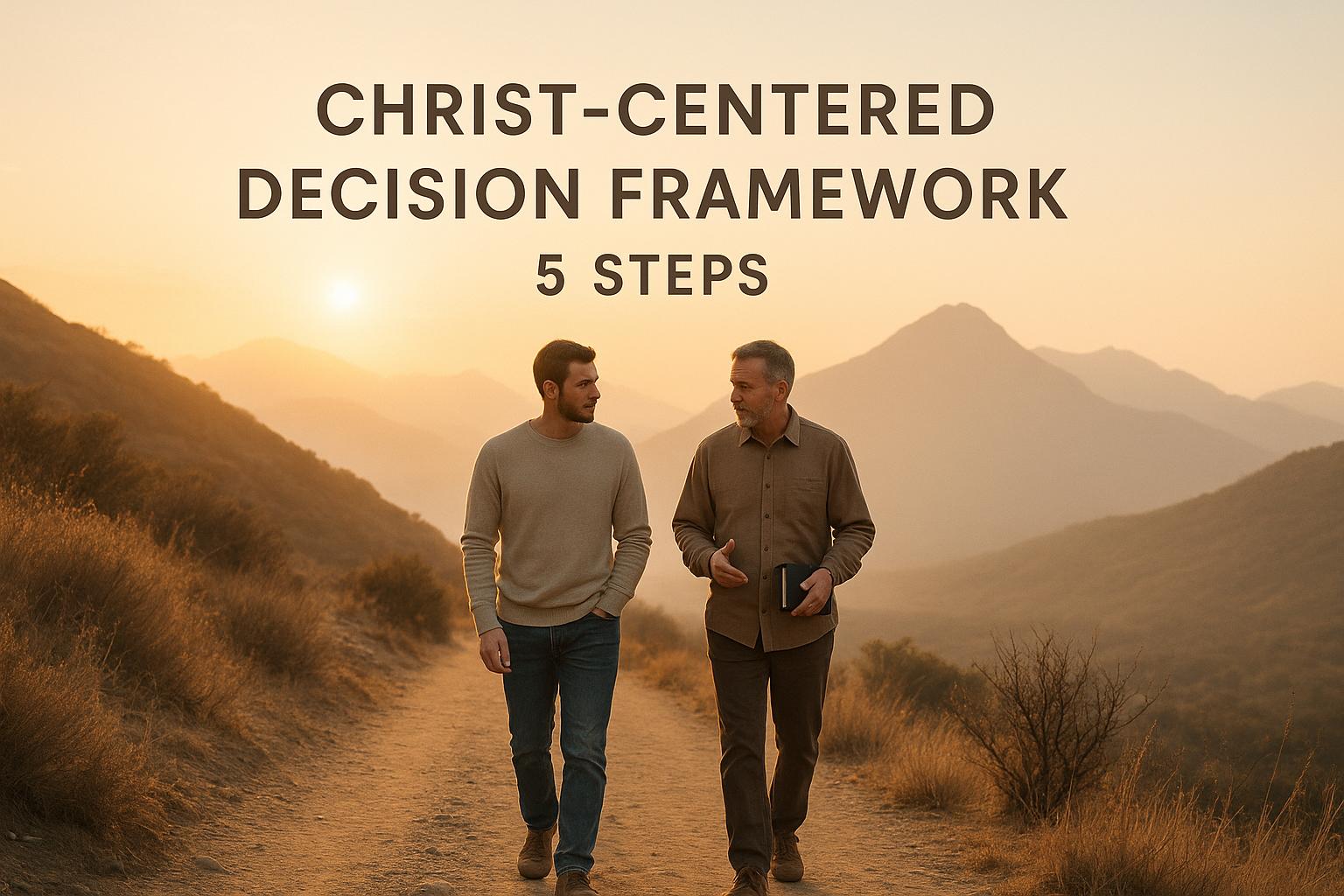
Life is full of choices, big and small. But how can you ensure your decisions align with God’s will? By following a Christ-centered framework, you can make thoughtful, faith-driven choices rooted in Scripture and prayer. This guide breaks it down into five clear steps:
Before diving into the practical steps of making Christ-centered choices, it's important to understand the biblical principles that form the foundation for such decisions. Scripture provides clear guidance on how believers can approach decision-making in a way that aligns with God's will.
The Bible serves as the ultimate guide for navigating life's choices. In 2 Timothy 3:16-17, Paul reminds us, "All Scripture is God-breathed and is useful for teaching, rebuking, correcting and training in righteousness, so that the servant of God may be thoroughly equipped for every good work." This verse underscores that Scripture isn't just theoretical; it's a practical tool for living a life that honors God.
When you're faced with decisions, the Bible provides direction on multiple levels. It offers direct commands, like "Love your neighbor as yourself" (Mark 12:31), and broader principles, such as being "wise as serpents and innocent as doves" (Matthew 10:16). These teachings not only set boundaries but also reflect God's values, which are demonstrated through the lives of biblical figures. By consistently studying Scripture and aligning your choices with God's principles - like integrity, love, justice, and humility - you can apply biblical truths to your unique circumstances with confidence.
Understanding God's will involves two aspects: His revealed will and His hidden will. God's revealed will is clearly laid out in Scripture, encompassing commands and principles that apply to all believers - such as loving God, serving others, and living with honesty. On the other hand, His hidden will refers to His specific plans for areas like your career, relationships, or where you live. While you may not always know the details of His hidden will, focusing on His revealed will allows you to trust Him with the rest. Proverbs 3:5-6 offers this reassurance: "Trust in the Lord with all your heart and lean not on your own understanding; in all your ways submit to him, and he will make your paths straight."
God's will isn't a narrow, precarious tightrope where one wrong step leads to disaster. Instead, it’s a wide path of righteousness. When you focus on honoring His character, you can walk that path with confidence.
Prayer is a powerful way to invite God into your decision-making process. As David Jeremiah explains, "Very often, God's Holy Spirit uses prayer to bring conviction or new ideas." When you bring your concerns and choices to God in prayer, you open your heart to His wisdom and direction.
The Holy Spirit plays a key role in helping you discern God's will. According to Desiring God, "The Spirit who makes his home within us, the Holy Spirit guides us into all truth, convicting us of our selfish propensities and pointing us to God's promises as we make decisions (John 16:12–15). He offers us comfort and peace when we feel dizzied by the sheer amount of decisions we make daily."
Jesse Wisnewski adds that the Holy Spirit works through Scripture, shaping your heart and aligning your desires with God's will. This enables you to act with wisdom and faith, even when the path ahead feels uncertain.
To become more attuned to the Holy Spirit's guidance, create a habit of prayer and regularly present your decisions to God. Pay close attention to your conscience and motives, as the Spirit often uses these inner prompts to steer you toward choices that align with biblical principles. If you feel an internal conflict about a decision, it might be the Spirit nudging you toward a better option. The Holy Spirit also works through practical means, such as wisdom gained from experience, common sense, and even circumstances, dreams, or visions. The key is to remain open and surrendered to God's leading, trusting that He will provide the clarity you need.
This biblical groundwork sets the stage for the practical steps of Christ-centered decision-making that follow.
Grounded in biblical principles, these five steps will guide you in aligning your decisions with God's will. They provide a practical framework for navigating life's choices with faith and wisdom.
Start by clearly identifying the decision at hand and reflecting on your intentions. Write out a specific statement about the choice you're facing. For example: "Should I accept the promotion to regional manager to achieve better work-life balance?" This clarity will help you assess your true motivations.
Take a moment to ask yourself: What's driving this decision? Are your motives rooted in fear, pride, or personal gain? Or are you genuinely seeking to honor God and serve others? James 4:3 offers a caution: "When you ask, you do not receive, because you ask with wrong motives, that you may spend what you get on your pleasures."
Consider these questions:
Turn to Scripture and prayer to seek God's guidance. Dedicate time to studying His Word and journaling your thoughts, feelings, and insights until you sense His direction.
While the Bible may not provide a direct answer like "Take the job in Denver", it offers principles about work, relationships, stewardship, and character. Use tools like a concordance or Bible app to explore relevant topics. Look for both specific commands and broader principles that apply to your situation.
Prayer is essential here. Set aside intentional time to pray about your decision, and don't rush. Some answers require days or even weeks of prayerful reflection. Include moments of silent prayer, inviting God to speak to your heart and paying attention to His guidance.
Keep a journal throughout this process. Write down Scripture verses that resonate with you, insights from prayer, and any sense of peace or unease you experience. Often, God's guidance becomes clearer over time rather than arriving in a single, dramatic moment.
God created us to live in community, and wise decisions are rarely made in isolation. Proverbs 15:22 emphasizes this: "Plans fail for lack of counsel, but with many advisers they succeed."
Reach out to two or three mature believers who know you well and whose spiritual judgment you trust. These could be a pastor, mentor, or a close friend who walks faithfully with God. Choose people who will speak the truth, even if it’s hard to hear.
When seeking their advice, come prepared. Share the details of your decision, the options you're considering, and what you've already learned through Scripture and prayer. Ask thoughtful questions like:
Listen attentively, especially if multiple advisors express similar concerns or affirmations. Sometimes, the Holy Spirit works through the wisdom and insights of others, even in their tone or hesitation.
Now it’s time to evaluate your options using the biblical guidance you’ve gathered. This step allows you to move beyond feelings and impressions to a thoughtful, Scripture-based analysis.
Create a simple comparison chart to weigh your options against key biblical values like love, stewardship, integrity, and service. For example:
| Biblical Principle | Option A | Option B | Option C |
|---|---|---|---|
| Love for God and Others | Demonstrates Love? | Demonstrates Love? | Demonstrates Love? |
| Stewardship | Uses gifts/resources? | Uses gifts/resources? | Uses gifts/resources? |
| Integrity | Aligns with honesty? | Aligns with honesty? | Aligns with honesty? |
| Service | Serves others? | Serves others? | Serves others? |
Don’t forget practical considerations, viewed through a biblical lens. Think about timing, current responsibilities, family impact, and finances. While a choice might seem ideal in theory, it may not be wise in your current circumstances.
Finally, look for peace and alignment. While emotions shouldn’t be the sole guide, God often confirms His direction through a sense of peace. As Colossians 3:15 says, "Let the peace of Christ rule in your hearts." If you feel persistent unease about an option, pay attention to that inner prompting.
After you’ve studied Scripture, prayed, sought counsel, and evaluated your options, it’s time to make your decision and trust God with the outcome. This step requires both boldness and humility.
Make your choice based on the wisdom you’ve gathered, but hold it with open hands. Understand that even with careful preparation, you may not have complete clarity - and that’s okay. God is more concerned with your heart’s desire to honor Him than with making a perfect decision.
Move forward with confidence in God’s sovereignty. Proverbs 16:9 reminds us, "In their hearts humans plan their course, but the Lord establishes their steps." Trust that God will guide you, even if adjustments are needed along the way.
Be open to redirection. Sometimes, God allows us to make a choice and then uses circumstances to steer us in a different direction. This isn’t failure; it’s part of His ongoing guidance. Stay flexible and attentive to His leading, even after committing to a path.
Finally, leave the results to God. Your responsibility is to make wise, faithful decisions. The outcomes are in His hands. Some choices may lead to challenges, while others bring unexpected blessings. Through it all, God’s grace and sovereignty remain constant. Focus on being faithful, and trust God to handle the rest.
Once you’ve embraced the five-step framework for decision-making, the next step is to cultivate daily habits that strengthen your spiritual connection. Good decisions are often the result of disciplined spiritual practices that keep you attuned to God’s guidance. By incorporating habits like prayer, Scripture study, and quiet reflection into your day, you’ll naturally train yourself to hear God’s voice and align your choices with His will.
Think of these practices as the foundation of your spiritual life. Just as a strong foundation keeps a building steady during storms, consistent spiritual habits will support you through life’s challenges. The more you seek God in small, everyday moments, the more instinctively you’ll turn to Him when faced with bigger decisions.
Start your mornings with 15–20 minutes of prayer. This doesn’t have to be complicated or long-winded. The goal is to create a quiet space where you can connect with God before the distractions of the day take over. Use this time to ask for wisdom, confess struggles, and invite the Holy Spirit to guide your thoughts and plans.
Commit to a daily Bible study. Whether it’s 10 minutes during your morning coffee or 20 minutes before bed, consistency is more important than the amount of time spent. Focus on understanding the Scriptures and reflecting on how they apply to your life. Ask yourself, What is God revealing to me here? How does this relate to my current situation?
End your day with reflection. Take a few minutes each evening to review your decisions and experiences. Where did you sense God’s guidance? What areas could use improvement? This practice sharpens your awareness of how God is working in your life.
Keep a journal to document your spiritual journey. Write down key insights, answers to prayer, and moments when you felt God’s guidance. Over time, this record can serve as a powerful reminder of His faithfulness and help you discern patterns in how He leads you.
Pause briefly during busy moments to refocus on Christ. Simple reminders - like setting an alarm on your phone for a quick 30-second prayer - can help you stay spiritually grounded, even during hectic days.
These daily practices create a solid groundwork for using tools that further align your decisions with Christ’s teachings.

Daily spiritual habits can be enhanced with tools designed to bring structure and focus to your decision-making process. The 10XF Life Planner, available for $27.00, combines practical organization with spiritual growth, helping you stay disciplined and intentional.
The planner includes daily prompts for spiritual reflection alongside traditional planning tasks. These prompts encourage you to evaluate how your decisions align with biblical principles and your calling as a follower of Christ. Instead of merely tracking appointments and to-dos, you’re actively connecting your daily activities to God’s purposes.
Morning Reset check-ins are built into the planner to help you start each day with a Christ-centered focus. These guided sections encourage you to surrender your plans to God, ask for His wisdom, and prioritize tasks that reflect kingdom values. This transforms a typical planning session into a spiritual discipline, preparing you for thoughtful, Christ-centered decision-making throughout the day.
The planner also emphasizes balance across key areas of life, helping you ensure that your choices reflect God’s priorities in every domain. When faced with decisions, you can quickly assess how different options impact these core areas, avoiding the temptation to focus on one at the expense of others.
For those seeking a deeper reset, the 10X Reset program offers a 10-day structured approach to renewing your mindset and rebuilding habits. This program is especially useful if you feel that your current routines aren’t supporting the kind of Christ-centered choices you want to make. It provides focused guidance for realigning your priorities and establishing new patterns for better decision-making.
The planner also includes identity check-ins that remind you of your identity in Christ. This is crucial because your decisions should flow from who you are as God’s beloved child, not from fear, comparison, or worldly pressures. When you’re grounded in this identity, it becomes easier to filter choices through the lens of God’s purpose for your life.
Finally, the habit-building tools in the planner help you maintain consistency in your spiritual practices, such as prayer, Bible study, and reflection. By tracking your progress and identifying areas for growth, you’ll strengthen the foundation needed to make wise, Christ-centered decisions.
These tools are most effective when paired with the five-step decision framework. Use your daily planning time to work through important choices systematically, documenting insights and guidance along the way. This structured approach ensures you stay focused and intentional, even when emotions run high or time feels limited.
When you follow the five-step Christ-centered decision framework - defining your motives, seeking God through Scripture and prayer, gathering godly counsel, comparing options against biblical principles, and acting in faith - you’re not just making choices; you’re shaping your identity in Christ with each decision. This process helps you live intentionally, aligning every part of your life with God’s purpose.
"Every time you make a choice, you are turning the central part of you, the part that chooses, into something a little different than it was before. And taking your life as a whole, with all of your innumerable decisions, you are slowly turning the central thing either into a heavenly creature, or into a hellish creature by simply making the decisions that you make."
This powerful reminder highlights why a Christ-centered approach is so important - it’s not just about practical outcomes, but about spiritual growth and transformation.
This framework works because it views decision-making as more than a simple process - it’s about your relationship with God, your trust in Him, your character, and your maturity. As you cultivate a deeper connection with God through daily prayer and reflection, you begin to understand His heart and align your desires with His plans. Each decision becomes an opportunity to grow in virtues like self-control, perseverance, and love. It’s not about obsessing over every detail of God’s hidden will, but about faithfully living in the present, trusting that God can guide, correct, and even redeem your choices.
Daily habits like prayer, studying Scripture, and reflection - along with tools like the 10XF Life Planner - lay the groundwork for this transformation. As Gerald Sittser wisely said:
"Our daily choices shape our trajectory."
Your choices don’t just influence your circumstances - they shape your character. By making decisions through a biblical lens, you create a life filled with purpose, one that reflects your identity in Christ. Trust the process, lean on God’s wisdom, and let Him guide your path forward.
Distinguishing between your own desires and God's will takes thoughtful prayer, deep reflection, and wise counsel. Begin by praying specifically for clarity and wisdom, asking God to shape your heart to align with His purposes. Spend time in Scripture to uncover principles that can guide your decisions and help you discern His direction.
Take a moment to examine your motives. Are your intentions focused on self-interest, or do they reflect a desire to honor God? Think about your unique calling and how the decision aligns with the responsibilities and opportunities God has already placed in your life.
It’s equally important to seek advice from spiritually grounded individuals you trust. Their insights can provide perspective and help hold you accountable. Be deliberate and take your time; avoid making decisions in haste. Ultimately, place your plans in God's hands, trusting that He will guide you toward the path you should take.
The Holy Spirit is central to guiding you in making choices that reflect God’s will. Through the wisdom found in Scripture, the Spirit works within you to shape your heart, align your desires with God’s purpose, and bring clarity to your thoughts. By remaining receptive to the Spirit’s guidance, you can approach decisions with faith and trust, even when the path ahead feels uncertain.
Incorporating a Christ-centered decision-making framework into your daily life requires both intentionality and faith. Start by setting aside time each day for prayer and reflection, inviting God to guide your choices. This practice helps ground your decisions in biblical principles and ensures they align with your identity in Christ.
To turn this into a regular habit, tools like the 10XF Life Planner can be helpful. They provide a structure to organize your day around Spirit-led priorities. By cultivating a routine of stillness, surrender, and deliberate action, you create space for God to lead your decisions and shape your journey.